
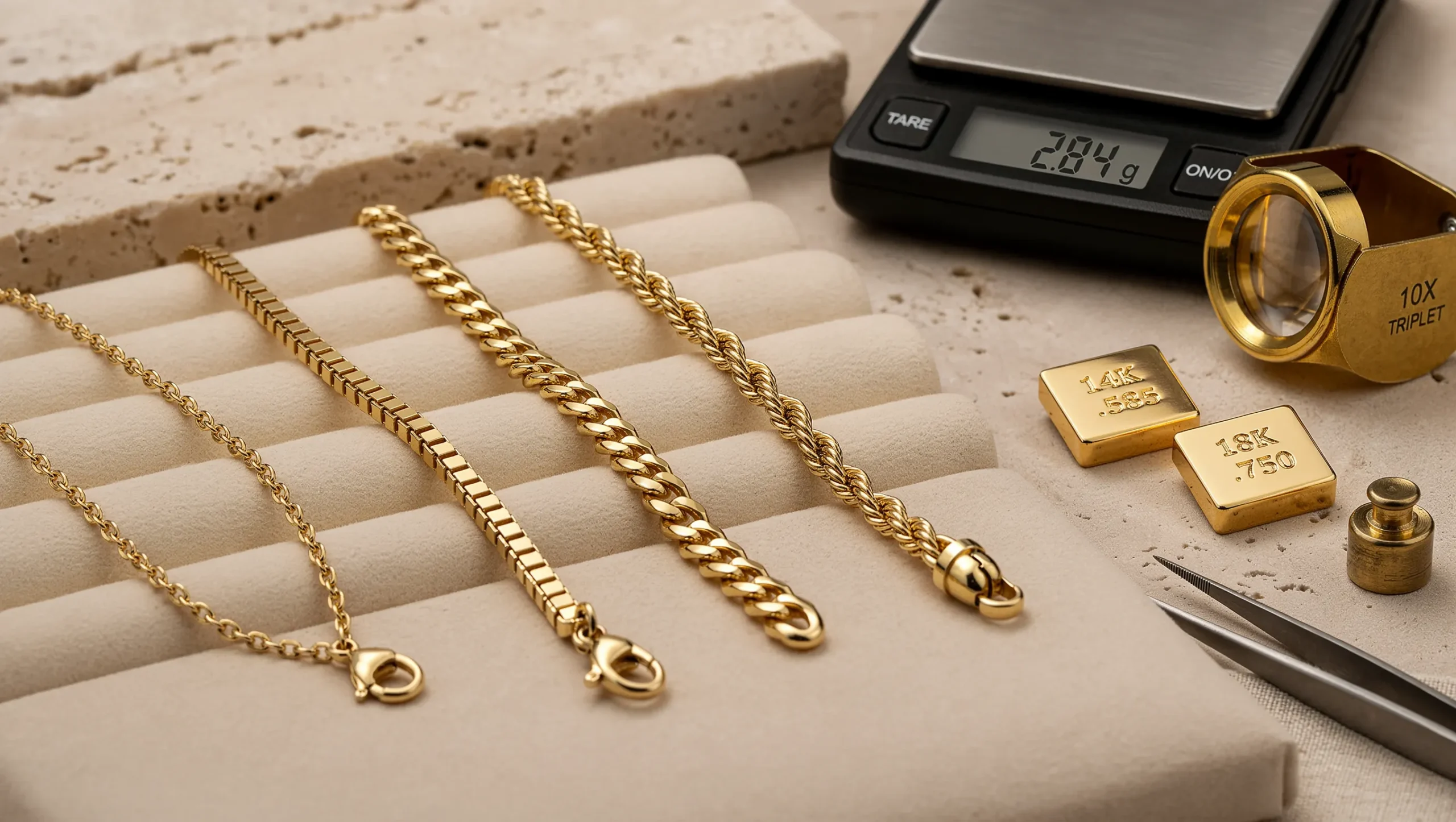
A thin gold necklace may look simple, but its price can vary considerably between jewelry stores. Have you ever wondered why two necklaces with similar designs carry noticeably different price tags? The answer often comes down to details that are easy to overlook, including gold purity, chain weight, and finishing quality.
Understanding Gold Necklace Prices helps you make a more informed decision before purchasing delicate gold jewelry. By comparing the actual gold content, construction, and craftsmanship, you can identify which necklace offers better value without spending more than your budget allows.
Why Thin Gold Necklace Prices Differ
Not all thin gold necklaces are made with the same materials or production methods. Even when two chains look almost identical, their gold content and construction can create meaningful differences in their retail prices.
Before comparing designs, consider what contributes to the final cost. Looking beyond appearance helps you recognize the factors that influence a necklace’s value and determine whether its price is reasonable.
How Gold Purity Affects Prices
Gold purity indicates how much pure gold a necklace contains. It is commonly measured in karats, with 24-karat gold representing nearly pure gold.
For example, 18-karat gold contains 75% gold, while 14-karat gold contains approximately 58.3%. Higher-purity gold generally has a higher material value, although alloy composition also affects durability and appearance.
Why Chain Weight Changes the Cost
Gold weight is another important pricing factor. A heavier chain generally contains more gold, which can increase its material cost even when its design looks similar to a lighter necklace.
However, thin chains can have hollow or delicate constructions. Checking the actual gold weight helps you understand what you are paying for rather than judging the necklace by its size alone.
How Craftsmanship Affects Gold Value
Craftsmanship influences how well a necklace is assembled and finished. Carefully connected links, secure clasps, and smooth surfaces can contribute to better quality and a more refined appearance.
Some handmade or intricately designed necklaces also carry additional labor costs. Therefore, the final price may reflect both the gold content and the skill involved in producing the piece.
How I Compared Thin Gold Necklace Prices
Comparing thin gold necklaces requires looking beyond the displayed price. Two chains may have similar appearances but contain different amounts of gold, use different purity levels, or involve different production techniques.
Understanding Precious Metal Pricing also makes it easier to separate the actual material value from additional costs such as labor, finishing, and retail markups. Instead of choosing the cheapest option, I focused on identifying what each price included.
Checking Gold Purity Stamps
I started by checking the purity stamp on each necklace. Markings such as 585, 750, and 916 indicate approximately 14-karat, 18-karat, and 22-karat gold, respectively.
These numbers provide a useful starting point when comparing jewelry. However, checking the seller’s documentation is also important because a stamp alone does not independently verify the metal composition.
Comparing Chain Weight and Gold Content
Next, I compared the weight of each chain to understand how much gold it contained. A lightweight necklace may have a lower price, but that does not automatically make it a better purchase.
As master goldsmith and certified gemologist Arta Talachian explains, “I have never known a good chain whose maker was reluctant to say what it weighed.” Asking for the exact weight makes it easier to evaluate the material content and compare similar designs.
Evaluating Necklace Finishes
I also examined the finish, including the smoothness of the links, clasp construction, and overall consistency. These details can reveal differences in manufacturing quality that are not immediately noticeable in product photographs.
Jewelry designer Steven Kretchmer emphasizes the importance of design proportions, explaining, “It is important to check the proportions and harmony.” His perspective highlights why visual balance and careful workmanship matter when evaluating a necklace.
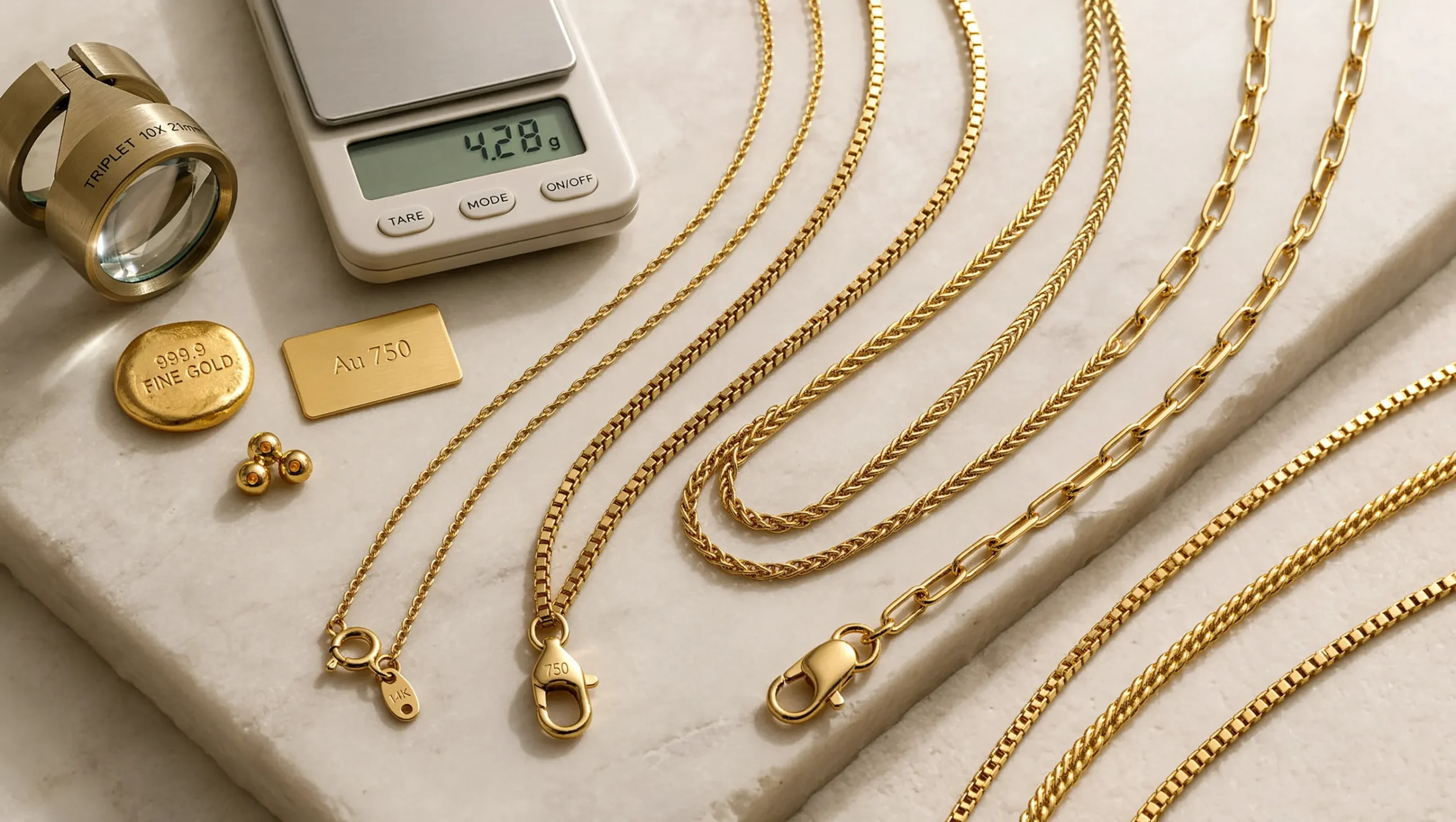
What I Learned From Comparing Gold Chains
Comparing different necklaces helped me understand why the lowest price does not always represent the best value. Gold content, construction quality, and additional production costs all influence what you receive.
Rather than focusing on the price tag alone, I considered how the necklace was made, how much gold it contained, and whether its design suited my everyday preferences.
Finding Value Through Gold Weight
Gold weight provides a useful reference when comparing necklaces with similar purity levels. A heavier chain generally contains more gold, although its construction and non-gold components should also be considered.
Comparing the net gold weight rather than relying only on the total product weight gives a clearer picture of its material value.
Recognizing Chain Quality Differences
Not every thin gold chain offers the same level of durability. Link connections, clasp strength, and finishing quality can influence how well a necklace handles regular wear.
A carefully constructed lightweight chain may be more suitable than a cheaper alternative with weak connections or uneven finishing.
Choosing Designs Within My Budget
I found it easier to narrow down suitable options by setting a realistic spending limit. Instead of automatically choosing the lowest-priced necklace, I compared gold purity, weight, and craftsmanship within my available budget.
This approach helped balance appearance, quality, and affordability without paying extra for details that were not important to my preferences.
Find a Thin Gold Necklace Within Your Budget
Choosing a thin gold necklace becomes easier when you understand what contributes to its price. Gold purity determines its precious metal content, weight influences its material value, and craftsmanship affects the quality of the finished piece.